
Projection Mapping for Architecture: From Digital Content to Spatial Experience
How can digital content respect architecture instead of flooding it? A practical guide to spatial hierarchy, materials, rhythm, light and sound.
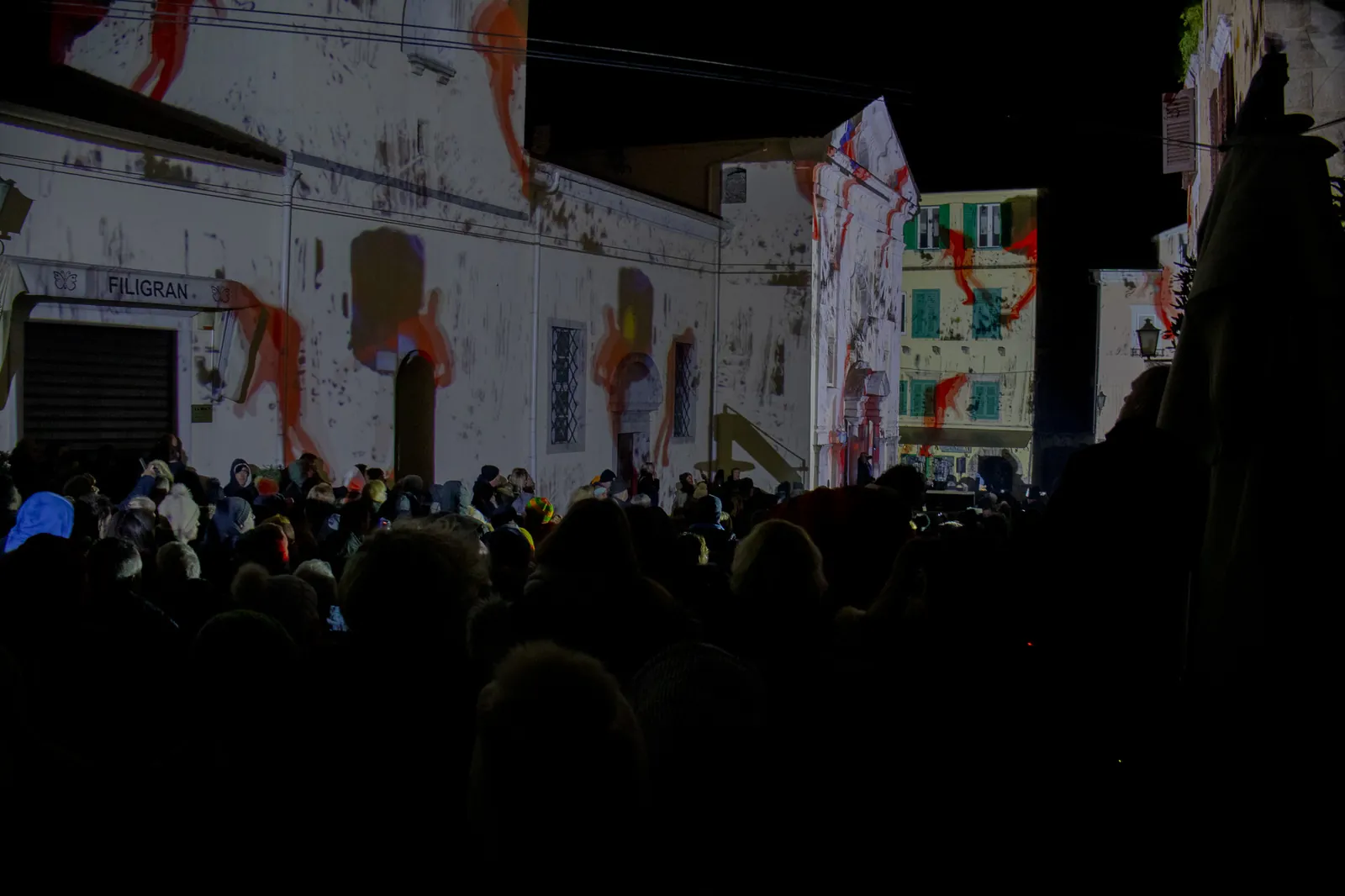
A façade is not an empty canvas
An architectural façade already has rhythm, hierarchy and direction. Windows are not the same size, while ledges and arches carry different visual weight. Before animating, analyse the building and identify its real structural and visual features.
Good projection content does not cover those signs. It uses them as a framework, allowing the digital layer to develop in conversation with what visitors can already read in the space.
From a virtual model to the façade
A digital model helps test the relationship between content and building, but the final result depends on measurements on site. Projector angles, building depth, roof pitch and window reveals all change how an image reads.
Mapping usually separates content into several layers: contours, openings, material, movement and sound. This gives the team control over intensity while keeping the architecture legible.
Rhythm, not constant movement
Animation that accelerates all the time becomes tiring. Architecture works best with pauses, repetition and clear changes in intensity. Slow transitions emphasise mass; fast details can draw attention to one opening or edge.
Colour should be chosen in relation to the material. Cool light on stone can read differently from warm light on the same surface, while a white projection on a white wall can almost disappear.
Architecture and sound
Sound can deepen the perception of a building, but it does not need to be constantly present. Long silences, one sound appearing on a particular façade or a change of rhythm can be stronger than a continuous music layer.
The best collaboration between sound and projection begins with the space: source position, reverberation and source visibility all shape how the whole event is experienced.